Cannibalism
What do a Brazillian Surrealist and Rutherglen have in common?
Cannibalism. Perhaps this word inspires fear or disgust. You may imagine isolated tribes in Papua New Guinea or Anthony Hopkins' spine-tingling performance in Silence of the Lambs (Chianti anyone?). It is a grotesque and taboo concept, which makes it a powerful metaphor for examining the relationship between New World and Old World wine regions and offers an avenue to explore how New World regions establish their œnological identities in the global market.
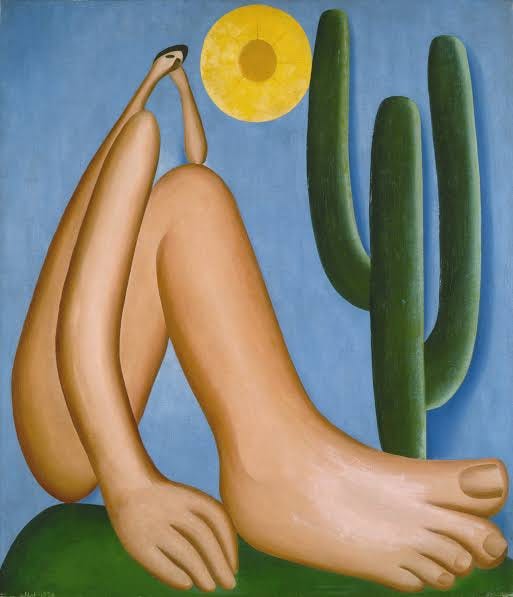
Abaporu. A Painting by Tarila do Amaral, de Andrade’s wife, which inspired him to write The Cannibalist Manifesto
Brazillian Surrealism: Oswald De Andrade
I came across Oswald de Andrade’s provocative text The Cannibalist Manifesto at university. The title titillated me, to say the least. His polemical work examined the formation of Brazilian culture in a post-colonial context and advocated for a type of cultural cannibalism where foreign ideas are consumed and feed the region’s developping identity.
Cannibalism is the taboo which italicises all art. All major movements are a cannibalism of ‘the other.’ From Jazz to surrealism to rococo. We see it play out with our favourite singers and authors; Harry Styles cannibalised Bowie, Borges cannibalised Cervantes. Though some might call this inspiration, this undermines the visceral rawness of creativity. The cannibalism metaphor grounds creation in the body, and looks at consumed as nourishment. Looking at winemaking as an art which produces culturally significant objects (i.e., wine), we can examine how emerging wine regions cannibalised diverse winemaking philosophies and techniques in search of a solid (and marketable) identity.
New World Identities
For those unaware, New World wine regions refer to non-traditional regions usually outside of Europe like Australia, North and South America, South Africa, New Zealand, and China. Old World covers familiar regions like France, Italy, Germany, Spain, and Portugal which typically have a winemaking history extending back thousands of years.
Most New World wine regions exist in a similarly post-colonial context to Brazil where Old World winemaking regions take the place of monarchies and empires. The relationship between the two can be paternalistic, but the cannibalism metaphor grounds their creative relationship in equality. When we look at how New World regions cannibalise Old World techniques and philosophies, we must examine each region as equals. France is not innately better than America, Spain is not superior to Argentina.
Where Old World regions had a lengthy history to rely on when establishing their identities in the global marketplace, New World regions had to rapidly develop a distinct style and community to market themselves with. As immigrants came across from Europe to the New World, they brought with them Old World techniques and philosophies which melded with existing communities and terroirs. Over time, these identities settle and become evolve into a new third culture: the consumed cultures become threads on a tapestry rather than a patchwork of isolated influences.
Evolving Identities: Rutherglen
One region which embodies this cannibalism metaphor is Rutherglen, a mythological ur-city of Australian winemaking.
Nestled on the border of Victoria and New South Wales, Rutherglen’s wines reflect a rich tapestry of influences from Jerez, Port, and Southern France. The first vines were planted in the 1850s by Lindsay Brown, and the gold rush years later brought migrant workers to work the fields. By 1880, it was a booming wine region, and the first in Australia to win international accolades.
This region is presently a little unfashionable. I associate it strongly with my grandfather’s after-dinner tipples which tasted like Christmas fruitcake. In the restaurant, it’s not an easy sell either. The fortified wines of Europe are exotic and heady compared to the domestic and seemingly familiar Muscats of Rutherglen. But when we examine this region, we find it saturated with Old World influences that have been eaten, used to nourish this new culture.
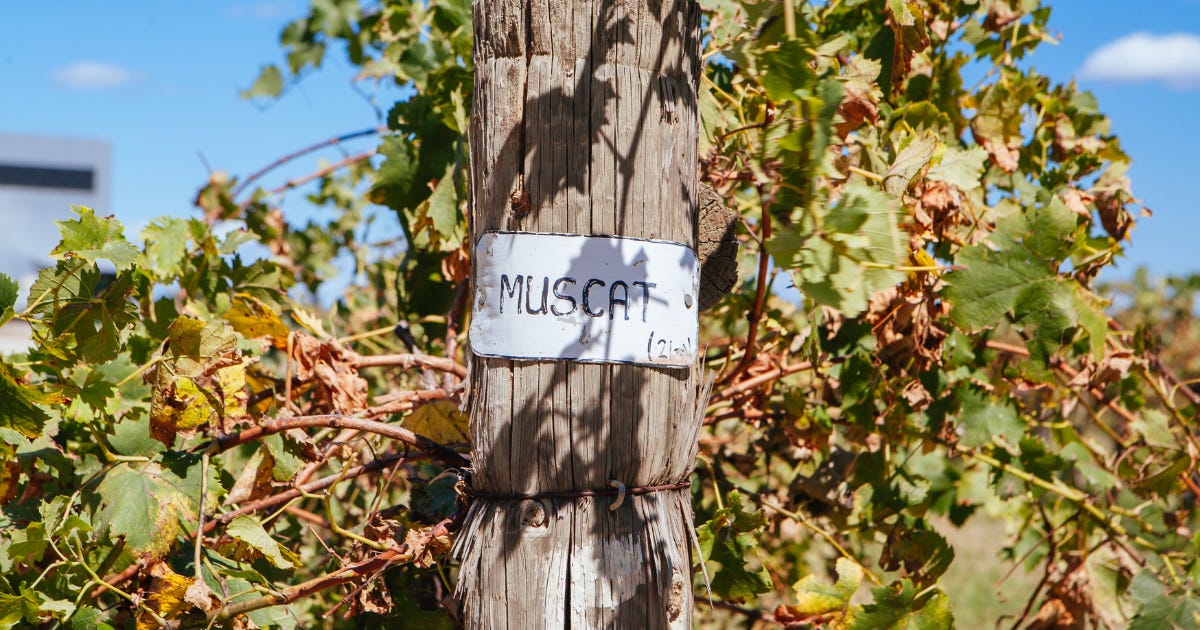
Muscat, Port, PX
To make Rutherglen Muscat, the grapes are first left on the vine to raisinate in a process called passerillage. These are picked, pressed, and partially fermented. Like Port, the wine is then fortified with a high ABV spirit with a 4-to-1 ratio, and aged in wood.
The Jerez influence shortly becomes evident: like Pedro Ximenez (or PX), the wine goes through extended oxidative ageing in barrels, and considering the region’s heat, it develops into a rancio style reminiscent of Southern France’s fortified wines. Over time, a portion of the wine evaporates (winemakers call this ‘the angels share’), so the barrels are topped up using a solera system, the very same for which Jerez is so famous.
Despite these influences, Rutherglen is not ‘the Port of Australia’ or the ‘PX of Australia.’ It has its own identity and traditions which emerged from the winemaking approaches it cannibalised over a century ago.
Thinking About Drinking
Cannibalism is an intense metaphor, but it is a useful lens to look at how New World wine regions continue to assert their identities. In Australia, we are not trying to create Burgundy or Bordeaux or Barolo; we have a rich terroir that went want to elevate. By cannibalising the Old Traditions, we form new traditions that express the uniqueness of our land.
This also allows us to examine Old World winemaking regions and consider how they cannibalised each other. From the Phoenicians to the French, winemaking cultures do not emerge isolated, but as part of a larger, historically grounded tradition. When we look at our wine regions critically, we are offered the chance to tug the tether connecting us to those first harvesters, viticulturalists, and winemakers who made the wine world what it is today.
Wow, what a difference a day makes. You've presented a seamless opening and a brilliant conclusion. I'm going to read it again.
Thanks